

The First Amendment: Freedom, Suppression, and Recent Challenges
by Mahkia L. Clark, CP
One of the most fundamental liberties guaranteed by the First Amendment of the US Constitution is the freedom of speech. The amendment states, “Congress shall make no law respecting an establishment of religion, or prohibiting the free exercise thereof; or abridging the freedom of speech, or of the press; or the right of the people peaceably to assemble, and to petition the Government for redress of grievances” (emphasis added).[i]
Recent developments have sparked renewed debate over free speech. For example, Jimmy Kimmel, a prominent talk show host, was briefly suspended by ABC in September, following his remarks regarding the assassination of political activist Charlie Kirk.[ii] The Walt Disney Company, parent company of ABC, said that the suspension aimed to “avoid further inflaming a tense situation at an emotional moment for our country,” noting that the “comments were ill-timed and thus insensitive.”[iii] Upon his reinstatement, Kimmel spoke emotionally to his viewers, saying that he never intended to “make light of the murder of a young man…or blame any specific group for the actions of what was obviously a deeply disturbed individual.”[iv]
In relation to freedom of the press, several major news networks united in opposition to press policy changes at the Pentagon in October, refusing to sign the updated agreement and surrendering their Pentagon credentials. While the Pentagon’s memo to the press stated that receiving classified information “is generally protected by the First Amendment and would not, on its own, normally trigger denial, revocation, or non-renewal” of press credentials, it clarified that the First Amendment “does not permit journalists to solicit government employees to violate the law by providing confidential government information.” The new rules also limit the press’s independent access to the Pentagon building, requiring that they have an escort from the Department of War.[v]
In a joint statement, the five main broadcast networks proclaimed their decision to decline the Pentagon’s new requirements, claiming that the policy is “without precedent and threatens core journalistic principles.” They declared that they will “continue to cover the U.S. military” and uphold the “principles of a free and independent press.” Chief Pentagon spokesperson Sean Parnell defended the change, saying, “We stand by our policy because it’s what’s best for our troops and the national security of this country.”[vi]
These examples raise a significant question about the scope of First Amendment protections. Under what circumstances may speech be suppressed? In Schenck v. United States (1919), the Supreme Court established the “clear and present danger” test for determining whether speech was protected by the First Amendment. Justice Oliver Wendell Holmes, Jr. stated that, “the question in every case is whether the words used are used in such circumstances and are of such a nature as to create a clear and present danger that they will bring about the substantive evils that Congress has a right to prevent.”[vii]
Justice Louis Dembitz Brandeis expressed a similar sentiment in his concurring opinion with Justice Holmes in Whitney v. California (1927). “To justify suppression of free speech, there must be reasonable ground to fear that serious evil will result if free speech is practiced…In order to support a finding of clear and present danger, it must be shown either that immediate serious violence was to be expected or was advocated, or that the past conduct furnished reason to believe that such advocacy was then contemplated.”[viii]
The “clear and present danger” test was replaced in Brandenburg v. Ohio (1969). The Supreme Court created a two-part test to prohibit speech that meets specific criteria:
- The speech is directed to inciting or producing imminent lawless action, and
- The speech is likely to incite or produce such action.[ix]
This “imminent lawless action” test remains the standard for evaluating the limits of free speech.
This article was submitted by NALA’s Diversity, Equity, & Inclusion (DEI) Committee.
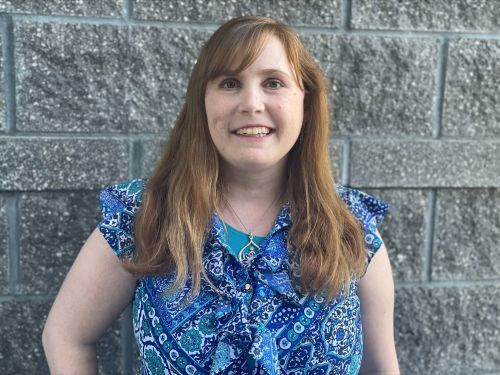 Mahkia L. Clark, CP, is a Montana native. She serves on NALA’s Diversity, Equity, & Inclusion (DEI) Committee. She also volunteers as NALA Liaison for the Montana Association of Legal Assistants. She is a member of the Paralegal Section of the State Bar of Montana and the Western Montana Estate Planning Council. She works at BJM Law PLLC. Mahkia obtained her Master of Legal Studies degree with a business law concentration from Washington University in St. Louis in 2024. She earned an Associate of Applied Science degree in paralegal studies from Missoula College in 2020, graduating cum laude.
[i] https://constitutioncenter.org/the-constitution/amendments/amendment-i
[ii] https://www.bbc.com/news/articles/c203n52x1y9o
[iii] https://www.pbs.org/newshour/arts/read-abcs-full-statement-on-reinstating-jimmy-kimmel
[iv] https://www.cbsnews.com/news/jimmy-kimmel-first-monologue-since-suspension/
[v] https://www.axios.com/2025/10/16/pentagon-press-reporting-rules-restrictions-hegseth; https://www.rcfp.org/wp-content/uploads/2025/10/2025-10-06-Revised-Pentagon-press-access-in-brief.pdf
[vi] https://www.reuters.com/business/media-telecom/us-news-outlets-reject-pentagon-press-access-policy-2025-10-14/
[vii] https://firstamendment.mtsu.edu/article/clear-and-present-danger-test/
 Categories