
Certification, continuing education, and networking are all opportunities that NALA offers. We understand that the paralegal profession is constantly evolving and professionals need to be able to keep up with the changes. That is why we have developed continuing education programs and services specifically geared for paralegal growth. Some of the educational resources we provide include our conference held every year in July and our library of online education sessions, programs, and publications.

About NALA
Trusted Since 1975
Our Mission
Equipping paralegals for the challenges of the future through certification, professional development, and advocacy.
Our Vision
Ensuring paralegals are known and valued as an integral part of the legal ecosystem.
The Certified Paralegal (CP®) credential is key to respect and opportunity throughout the legal profession. It is the only nationally accredited paralegal certification. Earning the CP® credential signifies that a paralegal is capable of providing superior services. The CP® credential has been acknowledged by the American Bar Association as a mark of high professional achievement, and more than 40 paralegal organizations and numerous bar associations also acknowledge the CP® as the definitive paralegal certification. Explore NALA’s CP® credential here.


Review NALA’s 2025 Annual Report.
In the beginning…
Adapted from an article by Jane H. Terhune, CLAS, and Dorthea Jorde, CLAS
The National Association of Legal Assistants, Inc. (NALA), an Oklahoma corporation, was born in Minot, North Dakota, in April 1975. The gestation period lasted a few years, and many legal professionals were directly or indirectly involved after the need for a national association for paralegals was first recognized in the early 1970s.
The first step, in 1973, was the creation of special national seminars and workshops for law office employees who were performing legal assistant tasks on the job. Attendance at the new educational programs was restricted to men and women whose attorney-employers signed an attestation that their job functions were closely akin to the legal assistant performance alluded to in the definition adopted by the special American Bar Association Committee. The programs were planned and presented by the Legal Assistant Section of the National Association of Legal Secretaries (NALS), which had supported and worked with the ABA Special Committee on Legal Assistants since 1968.
In 1974, a task force was appointed to investigate the feasibility of a national certification examination for legal assistants. Five legal assistants, two paralegal educators, and two attorneys served on this task force, which evolved into the first Certifying Board of NALA. After a series of questionnaires to existing national certification programs and paralegal program directors, it became clear that a separate national professional association must be formed for legal assistants.
In January 1975, the task force met with the NALS Executive Committee in Tulsa, Oklahoma, to draft a proposal to dissolve the Legal Assistant Section and support the formation of a new and separate association for legal assistants. Jane Terhune and Dorthea Jorde met with NALS corporate attorney Jack Freese and NALS Executive Director Maxine Dover to draft articles of incorporation, constitution, and bylaws. The bulk of this drafting was accomplished in a two-day marathon session in a Chicago Hotel Room.
At an emotion-packed meeting in April 1975, the NALS Board of Directors adopted the proposal, and NALA quickly became a reality. Within hours, the bylaws were adopted, and officers were chosen. The initial Board of Directors was composed of nine former members of the task forces.
TIMELINE
1975-1985
– The National Association of Legal Assistants, Inc. becomes a legal entity with headquarters established in Tulsa, Oklahoma.
– NALA members adopt a Code of Ethics & Professional Responsibility.
– The first issue of Facts & Findings is published with eight pages.
– The first certification exam is administered to 90 legal assistants across the US, with 48 achieving the Certified Legal Assistant credential.
– NALA welcomes its first affiliated associations (Colorado and Ohio).
– The NALA Manual for Legal Assistants First Edition is published by West Publishing Company.
– NALA announces the CLA Specialty program.
– NALA and the ABA Section of Economics of Law Practice jointly sponsor a nationwide seminar on the effective use of paralegals in law practice.
– NALA CLE offerings expand to include audio and video tapes.
– NALA members adopt the NALA Model Standards and Guidelines for Utilization of Paralegals.
– The first CLA short course takes place.
– Certified Paralegal Exam review courses begin.
– NALA establishes the Professional Development Committee.
1986-1995
– The National Paralegal Utilization and Compensation survey begins.
– NALA files amicus briefs in the United States Supreme Court in Blanchard v. Bergeron and Missouri v. Jenkins. The court’s decision in Missouri v. Jenkins affirms the conclusion of paralegal time at market rates in attorney fee awards and establishes precedent for subsequent fee awards by state and federal courts throughout the nation.
– NALA files three more amicus briefs in state courts supporting fee awards and paralegals’ ability to change employers in potential conflict situations.
– The Career Chronicle is published as a special edition of Facts & Findings.
– The Facts & Findings Editorial Board is created.
– NALA submits statements to legislatures and bar associations looking at the issue of non-lawyers practicing law and the regulation of paralegals.
– NALA Net is developed as a repository of ethical rules, opinions, cases, and guidelines affecting the utilization of paralegals.
– NALA is involved in the ABA Commission on Non-lawyer Practice and commission hearings.
– The Continuing Education Council is established.
– NALA’s Board of Directors adopts a new system of governance.
1996-2005
– NALA Membership Exchange is offered at the annual convention.
– NALA appears on two national television shows.
– NALA Campus self-study, web-based programs are introduced.
– A specialty task force is formed to redesign the Certified Paralegal Specialty certification, leading to the Advanced Paralegal Certification program.
– NALA Campus LIVE! webinars are developed.
– The Certified Paralegal (CP®) certification mark is granted by USPTO.
– The Human Resources Guide to the Paralegal Profession is created.
– The Making a Difference award is created.
2006-2015
– Leadership Enhancement and Preparation (LEAP) program created
– NALA files a third amicus brief in the United States Supreme Court in Richlin v. Chertoff, 2008, again addressing the award of paralegal time, this time under the Equal Access to Justice Act.
– NALA offers CLE gift certificates to all new and renewing members in response to the nation’s worst economic crisis in recent years.
– LEAP enhanced to include materials for leaders of affiliated associations
– Certified Paralegal Exam moves to computer-based testing.
– NALA apps created for App Store and Google Play: Facts & Findings app; Paralegal CLE app to provide access to NALA Campus and APC courses; NALA Meetings app
– The Certified Paralegal Program is nationally accredited by the National Commission of Certifying Agencies.
2016-Present
– Dr. Greta Zeimetz, CAE, joins NALA as Executive Director/CEO (2015–2019).
– NALA rebrands to NALA – The Paralegal Association.
– NALA’s logo is redesigned.
– Electronic voting is implemented.
– NALA updates its Mission Statement and creates a Vision Statement.
– NALA launches a new Awards Program.
– The Certified Paralegal Program is reaccredited by the National Commission of Certifying Agencies in 2019 and 2024 (through 2029).
– Vanessa (Vinnie) Finley, MBA, CAE, is named NALA’s new CEO (2019).
– The Certified Paralegal Exam Fundamentals book is released and updated twice to the current version: The Paralegal’s Companion.
– NALA navigates the COVID-19 pandemic.
– NALA hosts its first virtual conference in 2020.
– NALA hosts its first hybrid conference in 2022.
– NALA introduces digital badges.
– NALA creates the Diversity, Equity, & Inclusion (DEI) Committee.
– NALA announces the Leadership Exploration and Development (LEAD) Program.
– NALA develops Paralegal Core Competencies.
– The Bankruptcy section is added to the Certified Paralegal Knowledge Exam in 2024.
– National Paralegal Day is established as August 6th, and the first one is celebrated through a reading into the US Congressional Record on August 6, 2024.
– NALA celebrates its 50th anniversary in 2025.

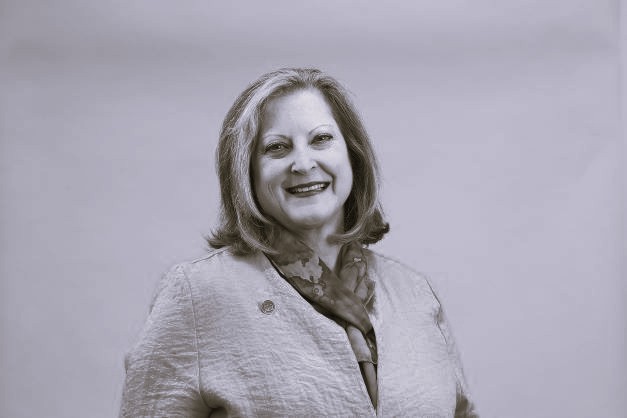
Cheryl J. Nodarse, ACP
2024-2026
Largo, Florida
Debra L. Overstreet, ACP
2022-2024
Porter, OK
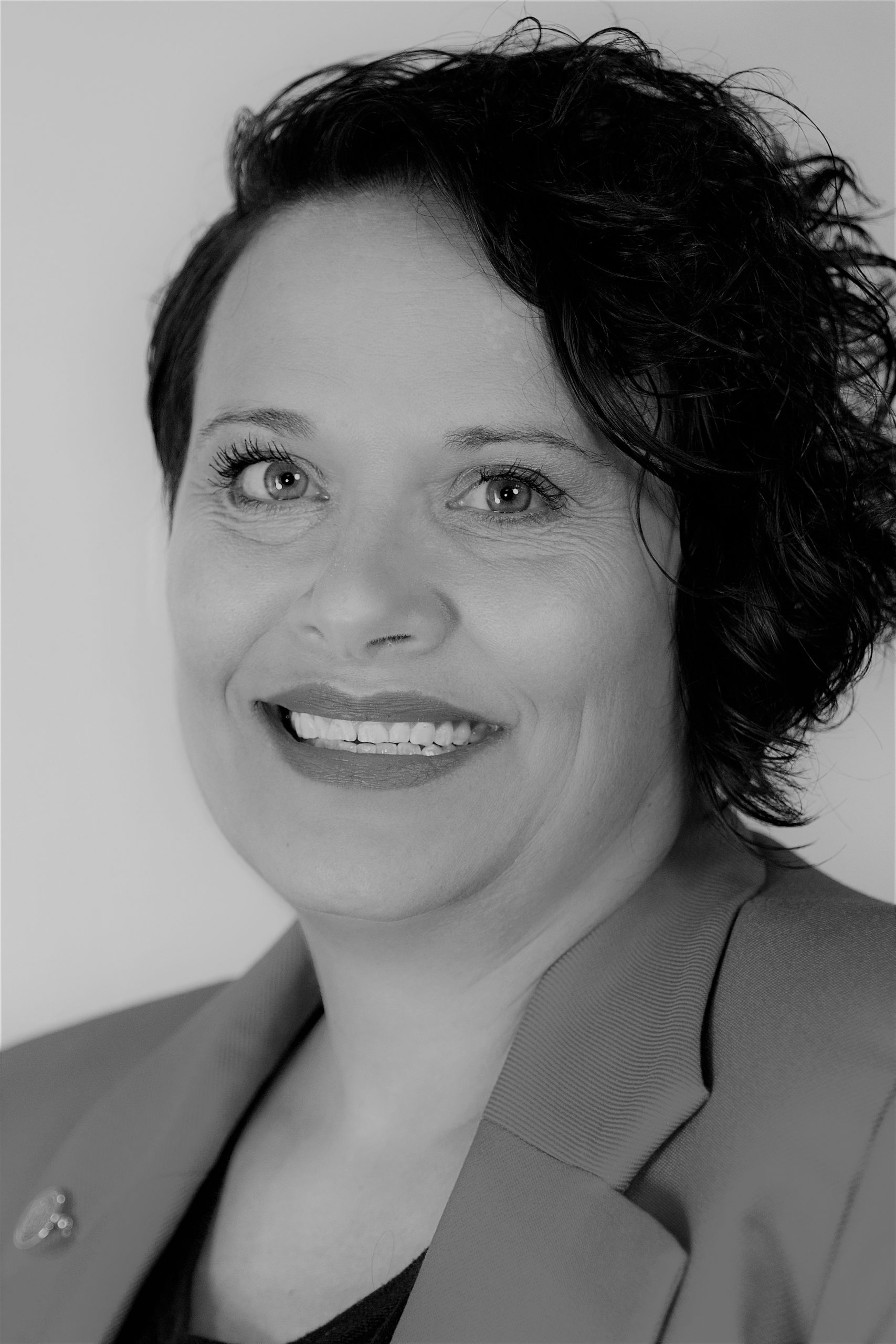
Melissa J. Hamilton, ACP
2020-2022
Bismarck, ND

Jill l. Francisco, ACP
2018-2020
Huntington, WV
Cassandra Oliver-Divens, ACP
2016-2018
Tulsa, OK
Kelly A. LaGrave, ACP
2014-2016
Lansing, MI
Ann L. Atkinson, ACP
2012-2014
Omaha, NE
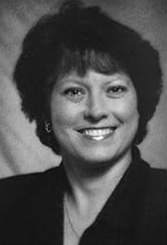
Karen Greer Mcgee, ACP
2010-2012
Shreveport, LA
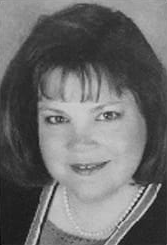
Linda J. Wolf, ACP
2008-2010
Dallas, TX
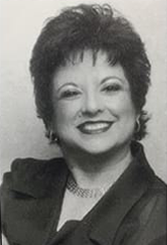
Tita A. Brewster, ACP
2006-2008
Las Cruces, NM
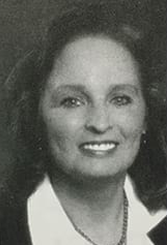
Debra J Smith, ACP
2004-2006
Bloomington, IL
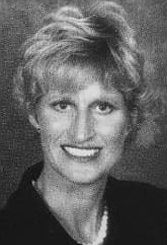
Vicki J Kunz
2002-2004
Bismarck, ND
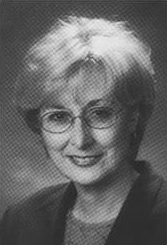
Patricia G. Elliott, ACP
2000-2002
Phoenix, AZ

Vicki Voisin, ACP
1998-2000
Charlevoix, MI
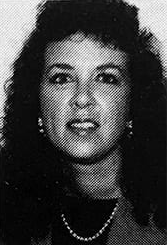
Brenda Allensworth Mientka, ACP
1997-1998
Colorado Springs, CO
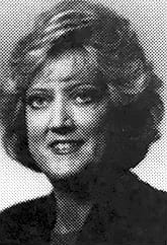
Amy J Hill, ACP
1996-1997
Raleigh, NC
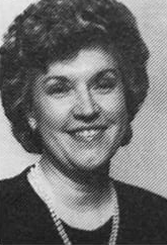
Pamela J. Bailey, ACP
1994-1996
Pittsburgh, PA
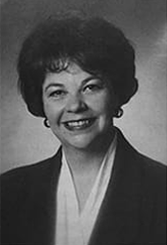
Karen M Dunn, ACP
1992-1994
Avon, CO
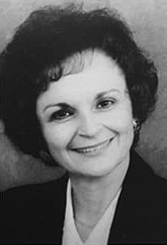
Connie Kretchmer, ACP
1990-1992
Omaha, NE
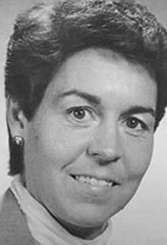
Karen B Judd, CP
1988-1990
Champaign, IL
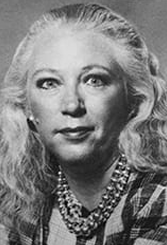
Karen Sanders-West, JD, ACP
1986-1988
Wichita, KS
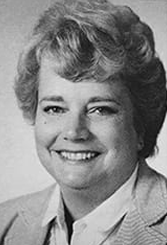
Kay Kasic, CP
1984-1986
NAPA, CA
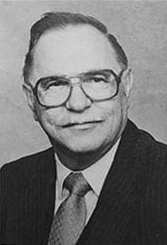
Robert F. Farrell, CP
1982-1984
Norfolk, VA
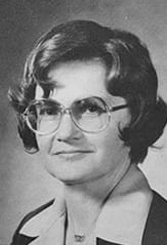
Signa Treat
1980-1982
Seattle, WA
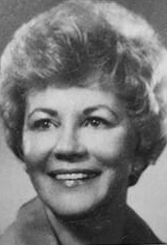
Janis Davidson, CP
1979-1980
Birmingham, AL
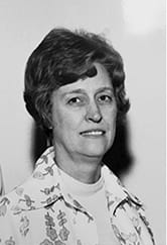
Dorthea Jorde, ACP
1977-1979
Minot, ND
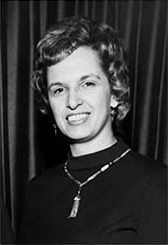
Jane Terhune, ACP
1975-1977
Tulsa, OK